
How to set a realistic budget for your wedding flowers
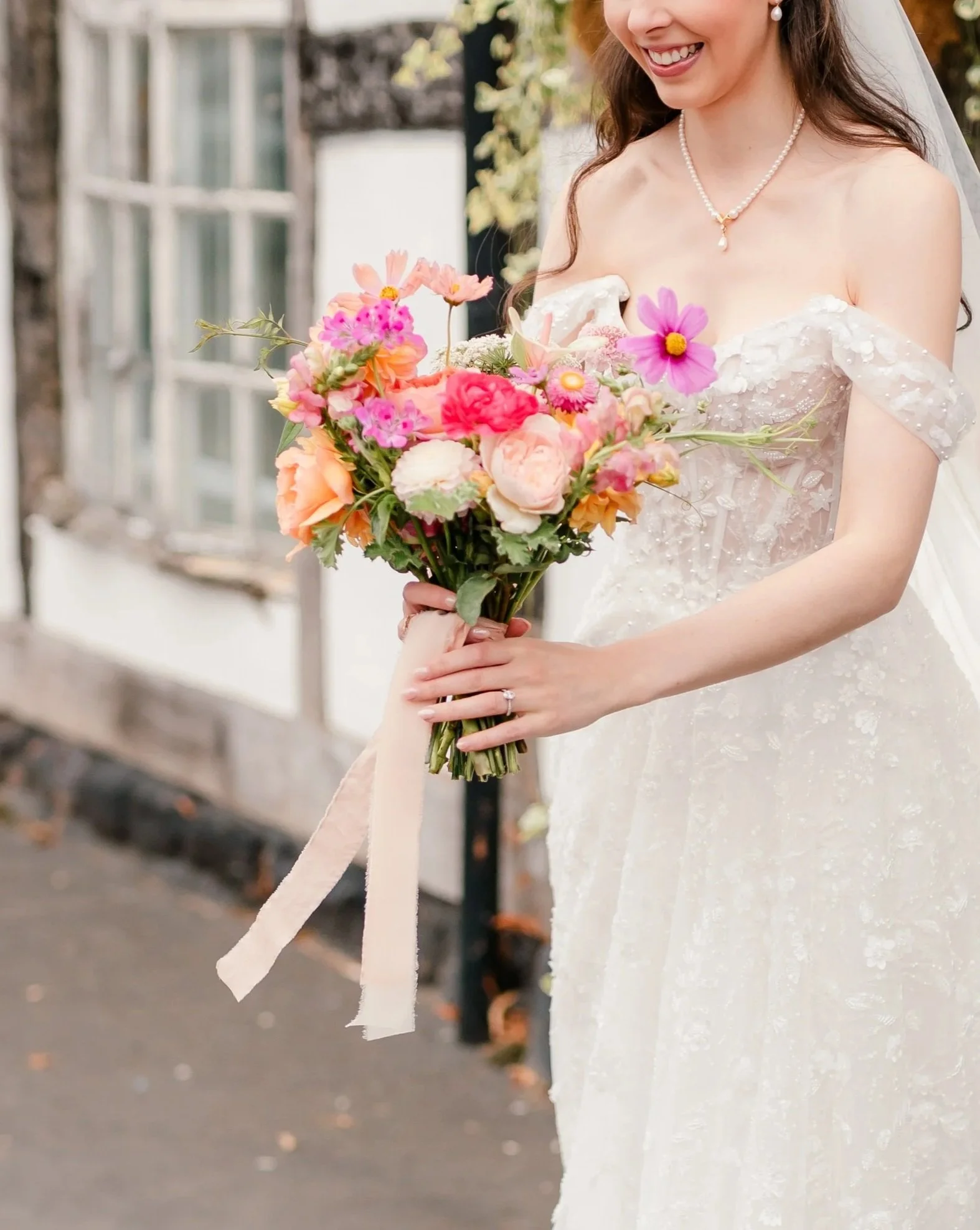
When it comes to wedding planning, flowers are often one of the most misunderstood parts of the budget. Couples either don’t know where to start or get wildly different quotes and wonder what makes one florist so much more expensive than another.
The truth is: wedding flowers aren’t just about stems, they’re about time, design, skill, and intention. Setting a realistic budget doesn’t mean spending more than you can; it means understanding what your money covers and how to use it well.
Here’s how to approach your flower budget with confidence:
Know the average (and what influences it)
As a general guide, most couples spend 10–15% of their overall wedding budget on flowers. That can shift up or down depending on your priorities and how central florals are to your day.
The main factors that influence cost include:
Scale – A single statement piece (like large urns or an arch) can have more impact than lots of small arrangements
Season – Seasonal flowers are usually better value, while out-of-season imports cost more to source
Design complexity – Some designs take more time, mechanics and staff than others
Labour & logistics – Delivery, setup, on-site styling, and collection after the event are often overlooked but essential parts of the service.
Every quote reflects the number of hours and hands involved, not just the flowers themselves.
Start with a range, not a figure
You don’t need to know the exact number before you enquire, but having a range helps your florist make design recommendations that fit.
For example:
£2,000–£3,000 will suit a wedding with a bouquet, buttonholes, table centrepieces and a floral display of some sort
£4,000–£6,000 allows for fuller ceremony and reception flowers, with designs that bring real atmosphere to your space
£7,000+ gives room for large, immersive installations, multiple feature areas, and complete abundance
The point isn’t to pick a number, it’s to decide how important flowers are to the overall feel of your day.
Think of impact, not quantity
One of the biggest budgeting misconceptions is thinking you need flowers everywhere. You don’t.
A few intentional designs can completely transform your day, especially when they’re placed where they’ll be most seen and photographed.
For example:
An abundant ceremony backdrop that later frames your sweetheart table
Two large urns at the aisle entrance that can be moved to the reception
Good floristry is about focus and flow, not volume.
Understand what you’re paying for
Behind every design are hours of unseen work:
Sourcing the right stems at the right stage of bloom
Conditioning and preparing them in the days before the wedding
Designing and building arrangements (sometimes on-site, extremely early in the morning)
Transporting, installing, and clearing everything afterwards
Luxury floristry isn’t about extravagance; it’s about care, craftsmanship, and cohesion. A skilled florist designs every piece to sit naturally within your day, so nothing feels random or out of place.
When you choose a florist who aligns with your style, you’re not just paying for flowers; you’re paying for trust and skill.
Let your florist guide you
Once you’ve shared your priorities and range, hand over creative freedom. Luxury wedding florists create their best designs when given creative freedom! A good florist knows how to make your budget work hard, suggesting smart design swaps or ways to repurpose elements between spaces.
For example:
Ceremony arrangements that double as reception decor
Seasonal alternatives that mimic the look of pricier flowers
Reducing table flowers slightly to elevate a larger statement piece
Flexibility always leads to better results.
Budget for what you’ll remember
At the end of the day, your flowers live on in every photo, every video, every memory of walking into the space you created together.
When you look back, you won’t remember the number of arrangements; you’ll remember the feeling and impact they provided.
So when you’re setting your budget, think about what you want your day to feel like and build from there.
A final thought
A realistic budget isn’t about limits; it’s about clarity. When you understand what goes into your flowers, you can make intentional choices that reflect your priorities and your personality.
Trust your florist’s process, lean into the season, and focus on impact over quantity. That’s how you get flowers that don’t just decorate your day, they set the tone for the entire day.